A practical B2B checklist for defining power, capacity, operating strategy, site conditions, controls, and delivery scope before selecting a commercial energy storage system.
Selecting a commercial energy storage system starts with the operating objective, not the cabinet size. A clear project brief helps suppliers match the battery, power conversion system, controls, enclosure, and delivery scope to the real application.
1. Define the operating objective
Confirm whether the system will be used for peak shaving, solar self-consumption, backup power, demand management, time-of-use optimization, EV charging support, or a combination of functions. Each objective changes the required power rating, usable energy, and control strategy.
2. Separate power from energy
Power in kW or MW describes how quickly the system can charge or discharge. Energy in kWh or MWh describes how long it can operate. Provide the expected load profile, peak demand, target operating duration, and daily cycle plan instead of requesting capacity alone.
3. Confirm the site conditions
Share installation location, ambient temperature, altitude, indoor or outdoor placement, available space, access for transport and maintenance, grid conditions, and local safety requirements. These details affect enclosure design, cooling, cable routing, and equipment layout.
4. Define interfaces and control
Identify the required communication protocols, monitoring platform, EMS functions, meter interface, solar or generator coupling, and any connection to an existing building management system. Interface confirmation should be completed before production.
5. Clarify the supply boundary
A quotation should state whether it includes batteries, PCS, EMS, BMS, cabinet or container, fire protection, HVAC, transformer equipment, cables, commissioning support, spare parts, documentation, packing, and transport. A clear boundary prevents gaps during installation.
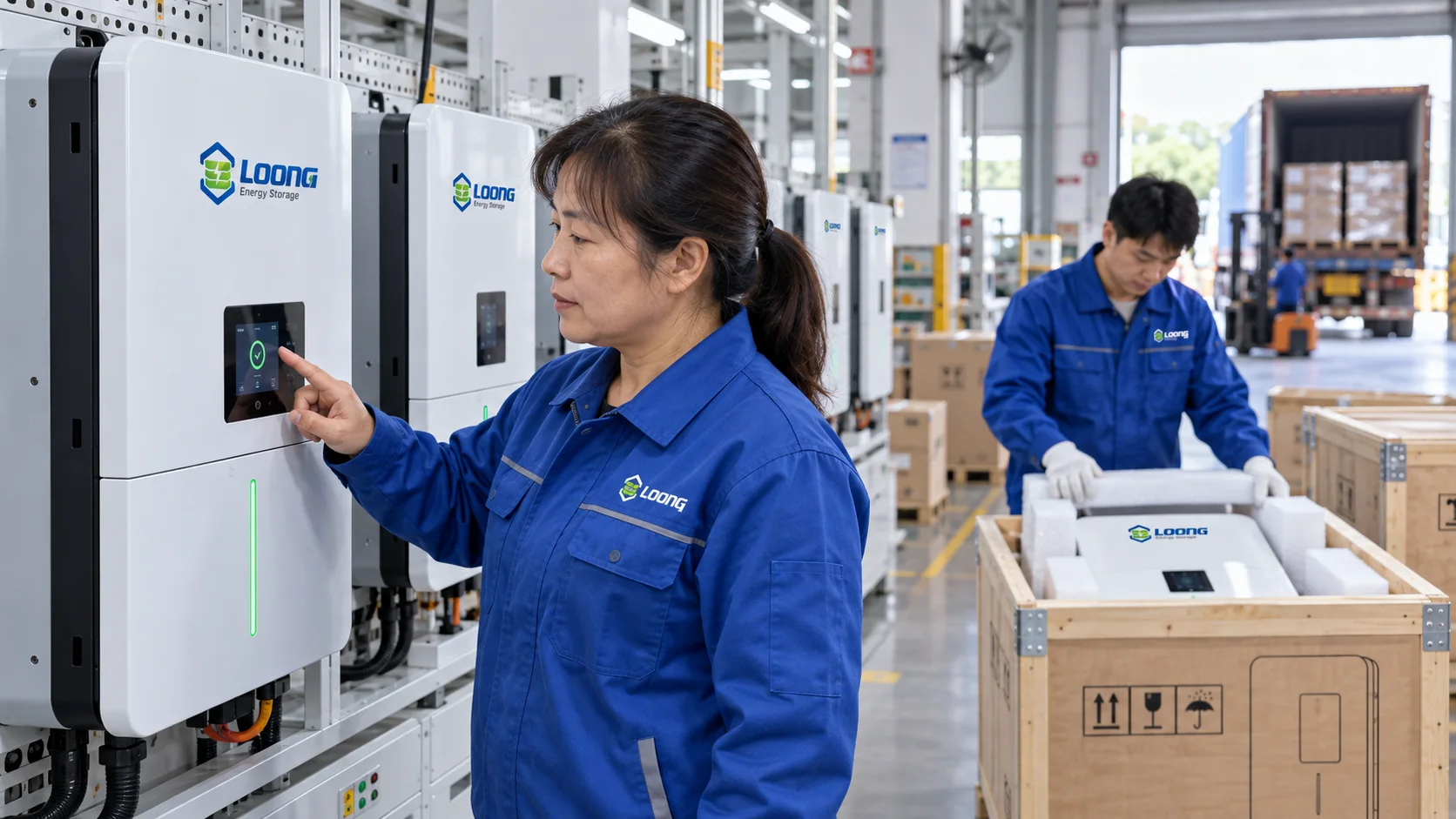
For an accurate proposal, send the application, load data, target power and capacity, site conditions, required interfaces, quantity, destination, and expected delivery schedule to the LOONG Energy Storage team.